English
 Russian
 Spanish
 Portuguese
 Arabic
 German
PMMA sheets create high-end hot tub shells: Dual empowerment of craftsmanship and texture
As a luxurious single product of the bathroom space, the hot tub needs to carry the long-term erosion of high temperature water bodies, but also take into account the visual beauty and comfort. Polymethyl methacrylate (PMMA, commonly known as acrylic) sheets, with their "plastic crystal"-like transparent luster, excellent mechanical properties, and skin-friendly texture, have become the ideal material for creating the shell of a high-end hot water bathtub. From an original sheet to a shiny, strong, elegant and comfortable tub shell, it is necessary to go through multiple precision processes, and each step directly determines the quality of the final product.
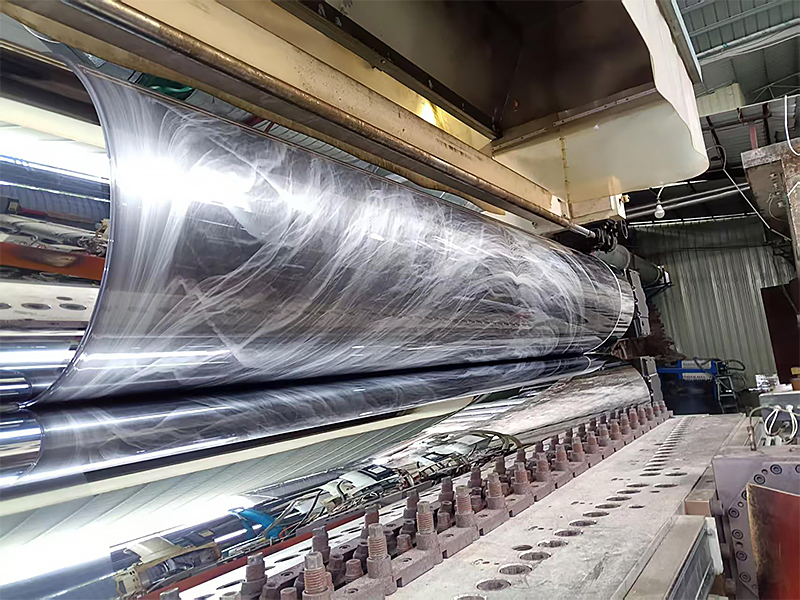
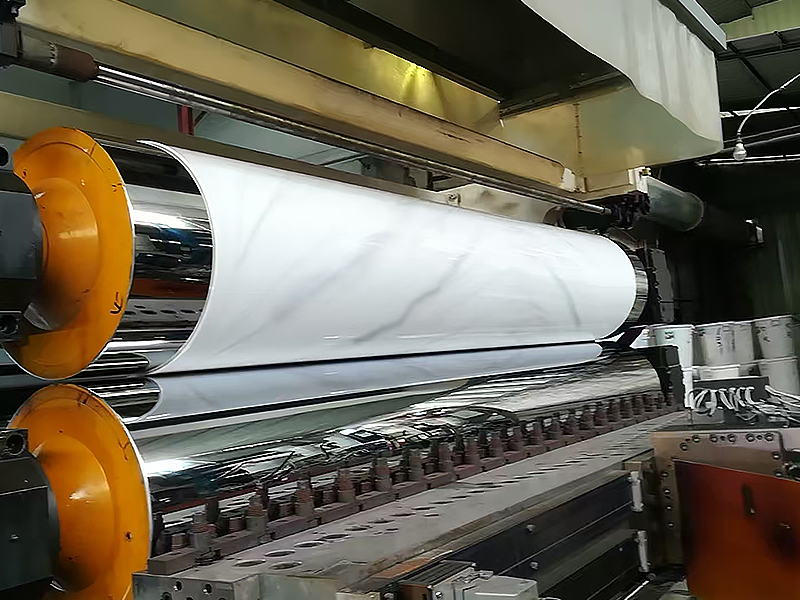
1. Raw material foundation: Precise selection of PMMA sheets
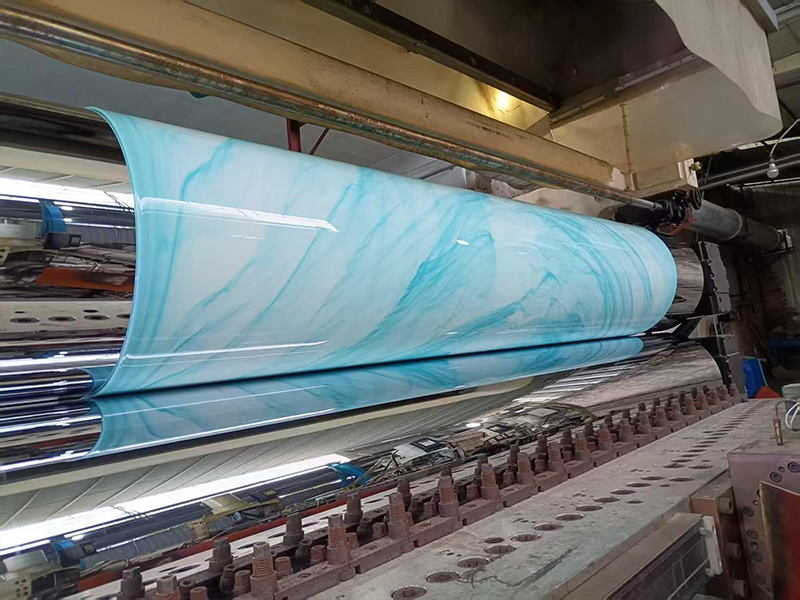
Not all PMMA sheets can meet the stringent requirements of the hot tub shell. The selection of raw materials is the first step to ensure the durability and texture of the product. The high-end hot tub shells all use **pure MMA monomer homopolymer cross-linked PMMA sheets**, which is different from ordinary copolymer sheets. This type of sheet builds a three-dimensional molecular network through cross-linking technology, like "welding" parallel molecular chains into a sturdy framework. This fundamentally enhances hardness, wear resistance, and chemical corrosion resistance, preventing problems such as yellowing, cracking, and loss of luster after long-term use.
The purity of raw materials directly affects the gloss and light transmittance of the shell. The purity of the MMA monomer in high-quality PMMA sheets should be higher than 99.9%, with the impurity content controlled below 0.001 ppm. Combined with vacuum degassing treatment to eliminate internal bubbles, the light transmittance of the sheet can reach over 92%, with soft light refraction, laying the foundation for the surface gloss. At the same time, the sheet needs to undergo strict high-temperature polymerization and annealing treatment. Through the regulation of gradient temperature zones, internal stress is released to avoid cracking caused by stress concentration in subsequent processing. This step is also an important but often omitted crucial process in many low-cost products.
2. Core of Forming: Vacuum Injection Molding Creates Elegant Shapes
The exterior of the hot tub comes in various shapes, and the smoothness of the curved surface directly determines its elegant appearance. The thermoplastic property of PMMA material makes it possible to achieve complex shapes. The mainstream method is to use the **vacuum thermoforming process**, which precisely replicates the design outline while ensuring the flatness of the surface.
The first step of the process is mold preparation. The mold material is selected from mirror-grade aluminum alloy or resin, with the surface roughness controlled below Ra 0.1 μm to ensure that the bathtub shell can replicate the smooth texture of the mold after molding. Then, the cut PMMA sheets are sent into the blow molding machine furnace for heating, with the temperature precisely controlled at 180-220℃ to soften the sheets to have good stretchability without degradation. The softened sheets are mechanically pressed and fixed on the mold surface, and negative pressure is formed inside the mold through vacuuming, combined with compressed air blowing to expand the sheets, allowing them to fully stretch and deform along the mold wall and closely adhere to the mold curved surface.
The key to achieving the desired shape lies in the control of the cooling rate. It is necessary to activate the cooling fan to perform a gradient cooling process to prevent the formation of internal stress or surface wrinkles in the sheet due to rapid cooling. Once the sheet has completely hardened, it can be demolded, and the initial bathtub shell mold can be obtained, which is consistent with the design. At this point, the mold already has the basic outline, but further reinforcement and fine processing are required.
3. Structural Reinforcement: Fiberglass Resin Composite Enhances Structural Integrity
Although pure PMMA sheets have a certain degree of toughness, they are unable to withstand the weight and pressure of a hot water bathtub filled with water. Therefore, a composite reinforcement process is needed to enhance the overall rigidity and load-bearing capacity, forming a "surface PMMA + inner reinforcement layer" composite structure. The core of the reinforcement uses the **unsaturated resin and glass fiber composite process**, where the two materials work together, preserving the texture of the PMMA surface while also providing the shell with sufficient structural strength.
The reinforcement process can be divided into two methods: mechanical spraying and manual application. In high-end production, mechanical spraying is mostly used. The uniformly mixed unsaturated resin and cut glass fibers are sprayed onto the bottom of the shell mold body through a special spray gun, and then the robot roller presses it flat to ensure uniform distribution of the fibers and full penetration of the resin, avoiding hollowing or weak points. After the application is completed, the product needs to be sent to a 40-50℃ constant temperature curing oven for full curing. Through precise temperature control, deformation in the later stage can be reduced. The shell after curing has significantly improved load-bearing capacity and can easily withstand long-term water pressure and daily usage impacts.
4. Surface Finishing: Multiple polishing processes achieve mirror-like luster and skin-friendly texture
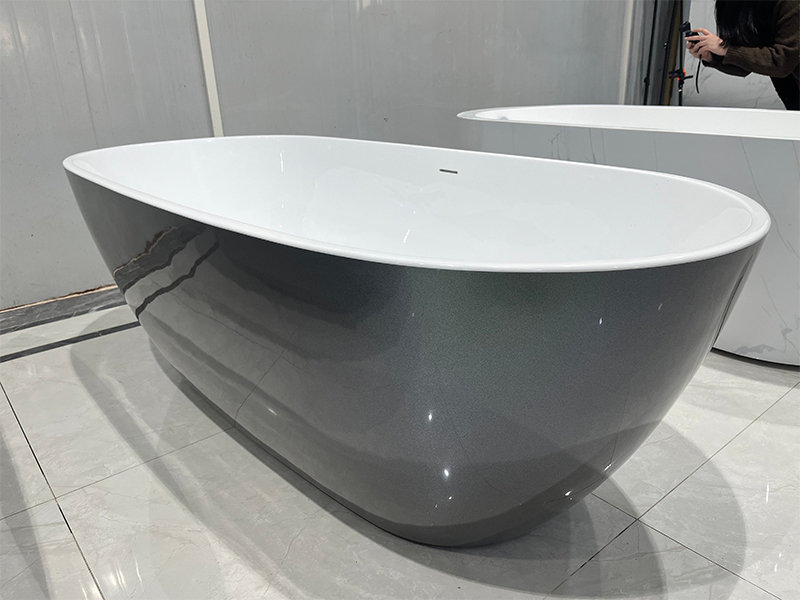
The gloss and texture of the outer shell of the hot tub directly affect the user experience. Multiple polishing processes are required to eliminate the processing marks and achieve a "mirror-like" level of smoothness and a delicate, skin-friendly feel. PMMA sheet materials are compatible with various polishing methods and can be combined based on precision requirements. As a result, the surface gloss reaches 90-120 GU, and the surface roughness Ra is less than 0.1 μm.
First, a mechanical polishing base treatment is carried out. A diamond polishing wheel is used to polish at a rotational speed of 2800 rpm, while coolant is applied to control the surface temperature below 40℃ to prevent damage to the surface material caused by high temperatures. Minor flaws and patterns after demolding are eliminated. For edges and complex curved surfaces, flame polishing technology can be employed. Using a flame temperature of 2000-3000℃, the acrylic surface is slightly melted, and the molecular chains rearrange to form smooth and shiny edges. If a perfect luster and transparency are desired, an atmospheric polishing process can be further adopted. The shell is placed in an organic solvent vapor at 60-80℃, causing the surface to slightly melt and fill in microscopic scratches. The final light transmittance can reach up to 95%, presenting a crystal-like transparent texture.
The polished surface not only has a charming luster but also boasts excellent wear resistance (equivalent to aluminum material). Minor scratches during daily use can be quickly repaired with a polishing agent, and it is easy to clean, avoiding the residue of scale and stains. At the same time, the PMMA material has slow heat transfer, so there is no cold sensation when in contact with the skin. Even in cold environments, it can provide a comfortable bathing experience, a feature that is difficult to match with materials such as ceramics and stone.
5. Product Verification: Ensuring Quality Stability from All Aspects
After the processing is completed, a rigorous final inspection process is required to check for any appearance defects, structural strength and sealing performance. In terms of appearance, check for scratches, bubbles and color differences on the surface to ensure uniform luster and smooth contours; in terms of structure, conduct pressure tests to verify the load-bearing capacity and resistance to deformation, simulating the stability under long-term water filling conditions; for sealing performance, focus on checking the joint areas and drainage holes to avoid water leakage risks. Additionally, conduct weather resistance and chemical resistance tests on the product to ensure it can withstand the chemical corrosion from bath products and ultraviolet radiation, and not yellow or age over a long period of use.